The hose is the part of a spraying outfit that fails first and gets thought about last. It is dragged over stubble, stepped on, coiled wet, left in the sun and asked to hold pressure the next morning. An agriculture spray hose is built for that: a polyester braid is laid between PVC layers, and it is the braid that carries the pressure while the PVC only carries the liquid. Farmers, spraying contractors and dealers who resell by the coil are the people buying it.
How to choose a spray hose
Four things decide the right hose, and only one of them is length. The first is inner diameter, because that sets how much liquid reaches the gun. Our range runs 8.0, 8.5, 10 and 13 mm inner diameter with outer diameters from 13 to 19 mm. A narrow bore is lighter to drag and easier to coil, which matters when one person is walking a 100 metre line through a standing crop; a wider bore loses less pressure over a long run and suits a bigger pump feeding two guns.
The second is wall thickness, which is what the gap between inner and outer diameter tells you. More wall means more PVC protecting the braid from abrasion, and abrasion is what kills hose in a field, not pressure.
The third is construction. Five layer hose is built for continuous high pressure work and stands up to being run hard every day through a season. Three layer braided hose is lighter duty at lower cost and is a sensible choice for a small holding spraying a few times a year.
The fourth is working pressure, and this is the one never to compromise on. Working pressure in our range is 50 bar on the smaller inner diameters and 40 bar at 13 mm, with burst pressure at 120 to 150 bar. That leaves a wide margin over any pump we sell. Garden hose and plumbing pipe have no pressure braid at all and must never be put on a spray pump; they balloon and then split, usually at a coupling and usually in somebody's hand.
What JP Kissan supplies
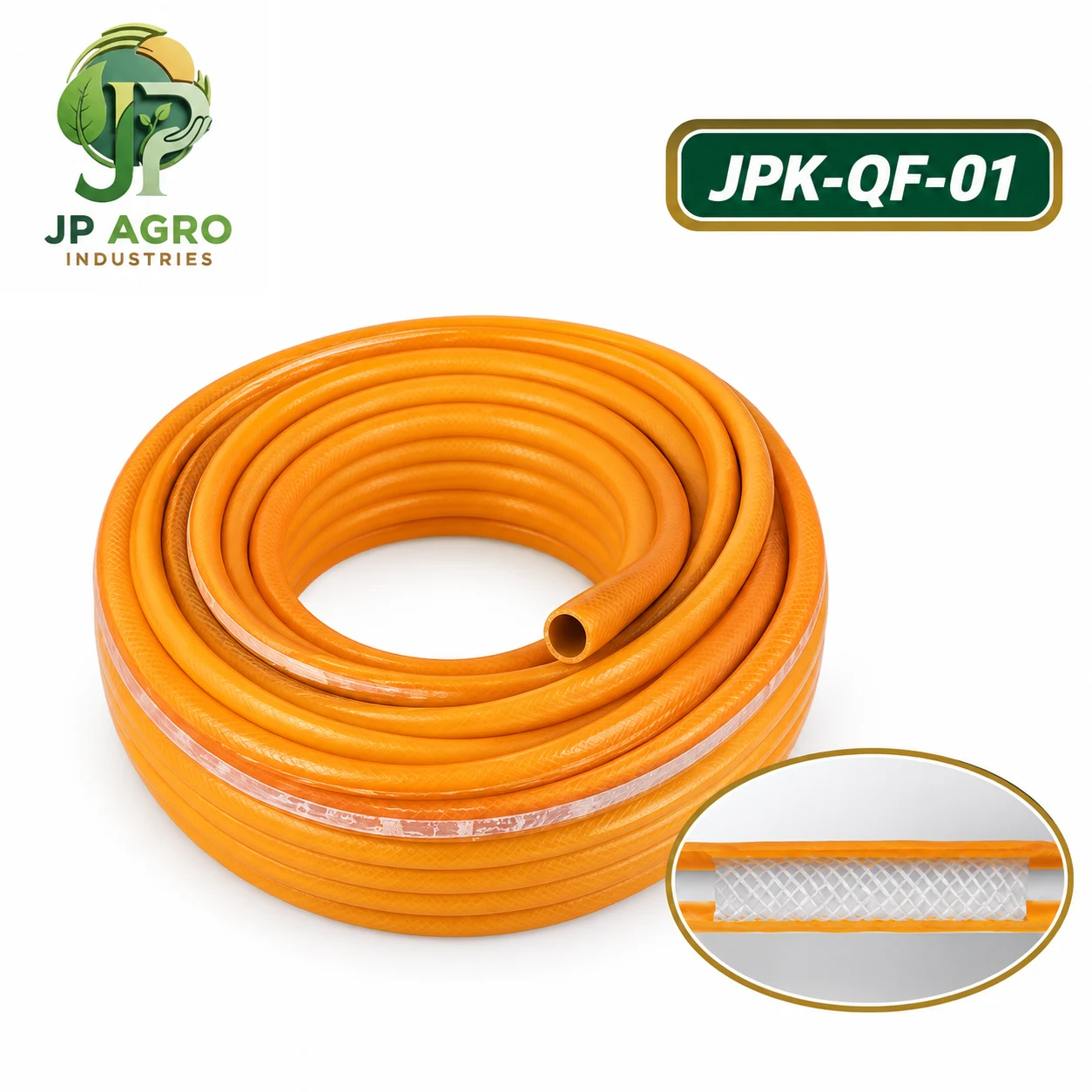
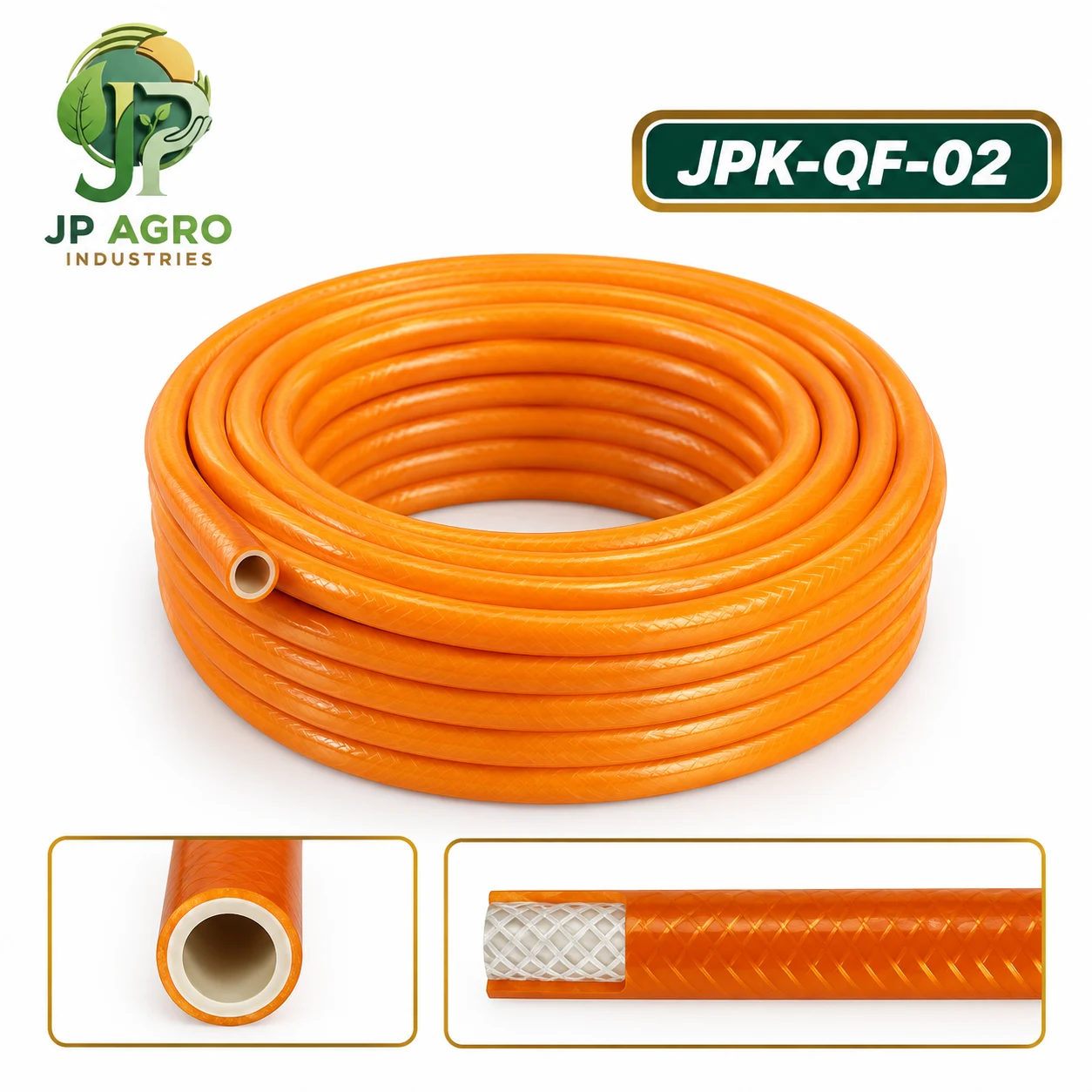
Three models cover the range, all supplied in the standard 100 metre coil. Agriculture Spray Hose JPK-QF-01 is five layer PVC rated up to 50 bar working pressure, built for daily use behind an HTP pump through a full spraying season. Agriculture Spray Hose JPK-QF-02 is the second five layer option, again rated up to 50 bar, offered in a different size within the same bore range so that a buyer can match bore to pump delivery without dropping to a lighter construction.
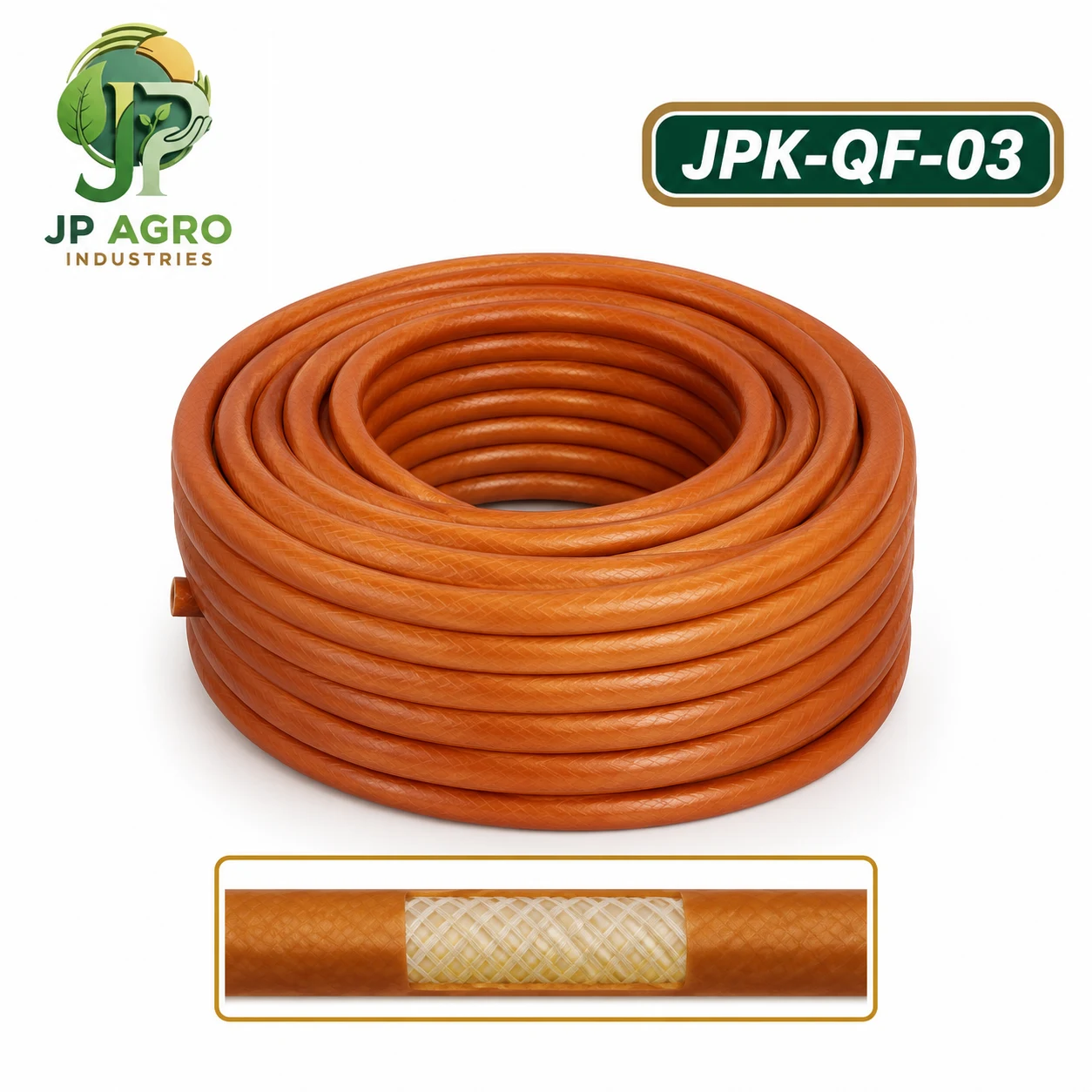
Agriculture Spray Hose JPK-QF-03 is the three layer braided grade, also rated up to 50 bar, lighter in the hand and lower in price, and the right answer for seasonal use or for a second hose kept as a spare. Tell us the pump model and the length of the run and we will tell you which bore to take, because the bore has to suit the pump's delivery in litres per minute, not the other way round.
The 100 metre coil is the standard unit of supply and reaches most of a field from a single pump position, which is why it is the default. A 50 metre length can be cut to order against a confirmed quantity, though the full coil works out more economical per metre. Workshops and dealers coiling and recoiling hose in volume also buy our hose binder and shaking machines.
What affects the price
Price per coil moves with three things: inner diameter, because a wider bore uses more material; layer count, because five layer construction costs more to build than three layer braided; and quantity, because coils bought by the dealer load are quoted differently from a single coil. Cut lengths carry a handling cost that the full coil does not. There is no published rupee figure for hose on this site; pricing is on enquiry through your nearest dealer against the model, the bore and the number of coils you need.
Where it is used
A cotton or chilli grower in a one hectare block runs a single 100 metre coil from a pump parked on the headland and covers the plot without moving the machine. An orchard contractor in a mango or guava planting needs the wider bore, because the gun is throwing high into the canopy and pressure lost along a narrow hose shows up immediately as a weaker spray at the tree top. A dairy or poultry shed uses a shorter run of the same hose on a pressure washer for wash-down, where the hose spends its life being dragged across concrete and the wall thickness is what keeps it alive.
A practical note on storing hose
PVC hose is damaged more in storage than in use. Sunlight hardens the outer layer and the hose then cracks at the first sharp bend of the new season, so coil it in shade or under cover and never leave it lying across a yard through the summer. Flush clean water through it before putting it away: chemical left inside attacks the PVC from within and the damage is invisible until it fails. Coil it loosely in wide turns rather than folding it, because a kink crushes the braid at that point permanently. Keep it off bare concrete in the monsoon and away from diesel and oil spills. When you refit it, check that the brass joints and cocks at each end are not biting into the wall, and replace the gun nozzle if the pattern has gone coarse, since a worn nozzle makes the pump work harder through the same hose. The hose should always be rated above the pump: check yours against the pressure of your HTP power sprayer before the season starts.