A petrol engine on a farm is rarely bought on its own merits. It is bought because a pump has outlived its engine, because a borewell is too far from a wire, or because a workshop is assembling a sprayer set around a customer's existing pump. These are the four stroke petrol engines that drive JP Kissan sprayers, water pumps and tillers, supplied loose so that a farmer, a mechanic or a dealer can fit one to the machine already standing in the yard.
How to choose a gasoline engine
Start from the driven machine, never from the engine. Find the power the pump or the implement is rated for, then pick an engine that delivers it comfortably at the speed the machine is meant to run. An engine that is only just big enough will drop below its rated rpm the moment load comes on, and a plunger pump that loses rpm loses both pressure and delivery at the same time. The pump then gets blamed for a fault it does not have.
Second, check the shaft. Shaft diameter, shaft length, the key and the keyway, and the bolt pattern on the mounting face all have to match the pulley, coupling or gearbox you are fitting. A 6.5 HP engine that will not take your existing pulley is of no use, and this is the single most common reason a replacement engine goes back to the dealer. Measure the old shaft and the pulley bore before ordering, or send a photograph of the mounting face, and we will confirm the fit rather than guess at it.
Third, think about how the engine will be started and where it will stand. Recoil start is simple and has nothing to go flat, which is why it suits a machine that sits unused between seasons. Weight matters if the set has to be carried along a bund or lifted onto a trolley. Fuel is the last point and an easy one: a four stroke runs on plain petrol with oil in the sump, so there is no mixing to get wrong at the pump.
What JP Kissan supplies
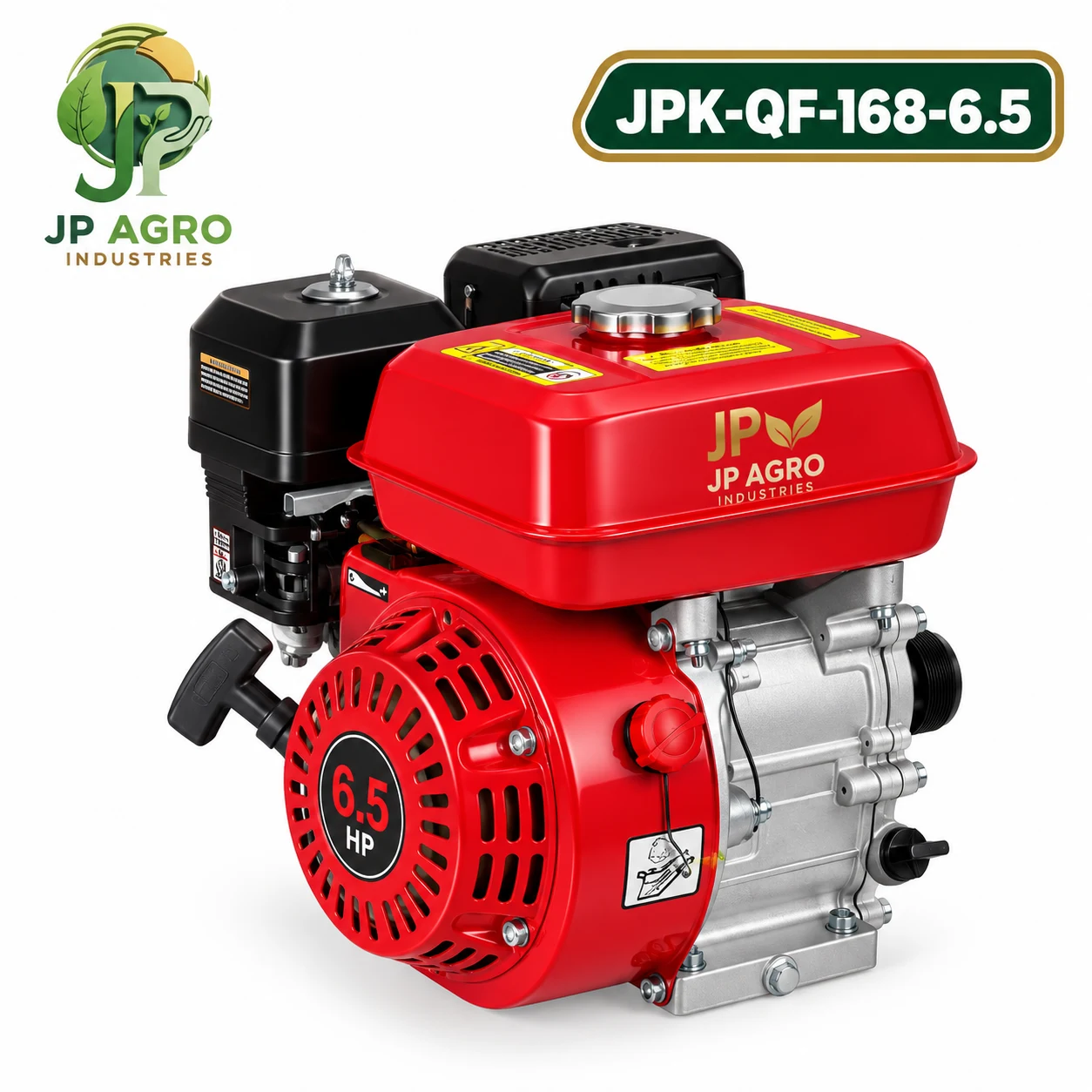
The Gasoline Engine JPK-QF-168-6.5 is the larger of the pair, a four stroke petrol engine rated 6.5 HP, running 3000 to 3600 rpm with a maximum torque of 13 N.m. It weighs 14.3 kg and measures 385 x 320 x 345 mm. It is the engine to specify where the driven machine is a larger plunger pump, a two or three inch water pump, or a cultivator in the 196cc class such as the JPK-TF-GT001A, which is itself rated 6.5 Hp.
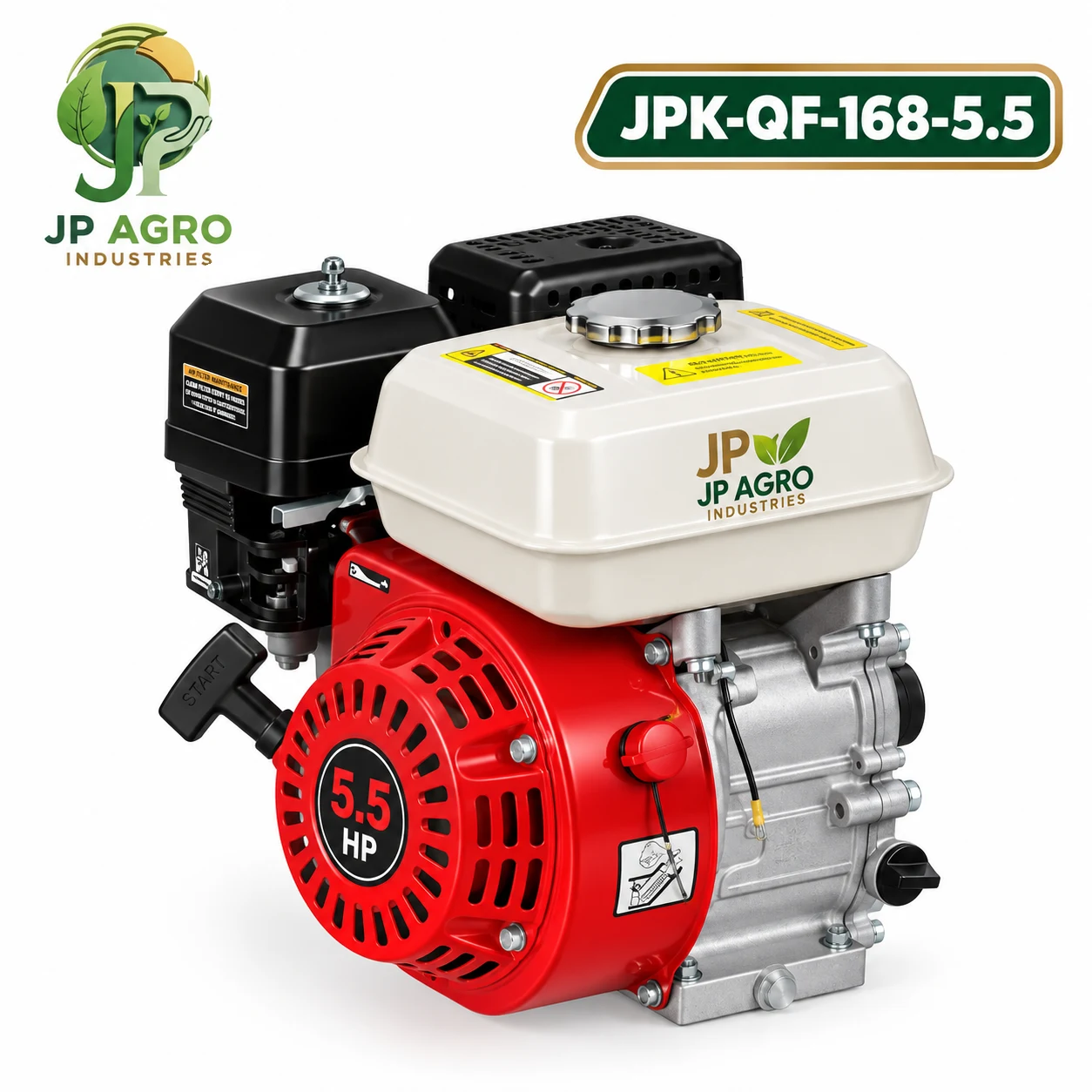
The Gasoline Engine JPK-QF-168-5.5 is the same frame at 5.5 HP, also 3000 to 3600 rpm and 13 N.m, at the same 14.3 kg and 385 x 330 x 345 mm. It suits lighter duty on the same kinds of machine, and matches the 163cc, 5.5 Hp class represented by the JPK-TF-GT007. Our petrol water pumps in the two and three inch sizes are rated for a 5.5 to 7.5 HP drive at 2000 to 3200 rpm, so both engines fall inside that window depending on the head and flow you are asking for.
At the small end, the 139F four stroke is the engine used on our knapsack machines rather than as a loose unit. On the Knapsack Power Sprayer 139F it is rated 1.4 PS at 7500 rpm and runs on pure petrol with no oil mix, which is the point of a four stroke on a back-carried machine. If you are replacing a two stroke knapsack engine, say so when you enquire, because the mounting and the fuel handling are both different.
What affects the price
Rated power is the first factor, so the 6.5 HP unit is quoted above the 5.5 HP. Beyond that, the shaft configuration, the starting arrangement and whether the engine is supplied bare or with a pulley and base frame all change the figure. Dealer quantities and workshop quantities are quoted differently from a single replacement engine. No rupee price is published for these engines; pricing is on enquiry through a dealer, quoted against the model, the shaft you need and the quantity.
Where it is used
A sprayer set standing in a Maharashtra grape orchard whose pump is sound but whose engine has lost compression is the commonest case: the pump stays, the engine is swapped and the set is back at work the same day. A borewell or canal lift in a field with no power connection runs an engine-driven water pump through the dry months, where the engine is doing six to eight hours a day. And a dealer workshop building a custom trolley sprayer for a contractor buys engines loose and mates them to whichever pump the customer has specified.
A practical note on servicing
Petrol engines on farms almost never die of overwork; they die of dust and of stale oil. In Indian field conditions the air filter is the first thing to check and the last thing anyone remembers. Open it after every long day in dry soil, tap out or wash the element as the manual for your engine states, and never run the engine with the filter removed, because a few hours of unfiltered dust will score the bore. Change the oil at the intervals printed in the manual supplied with the engine, and bring the first change forward after a new engine has run in. Drain the tank or run the carburettor dry before the engine stands unused for a season, since petrol left in a bowl gums the jets and the engine will refuse to start when you need it in a hurry. Replacement parts for this range are listed as engine spare parts F01 to F24 in the spares catalogue.